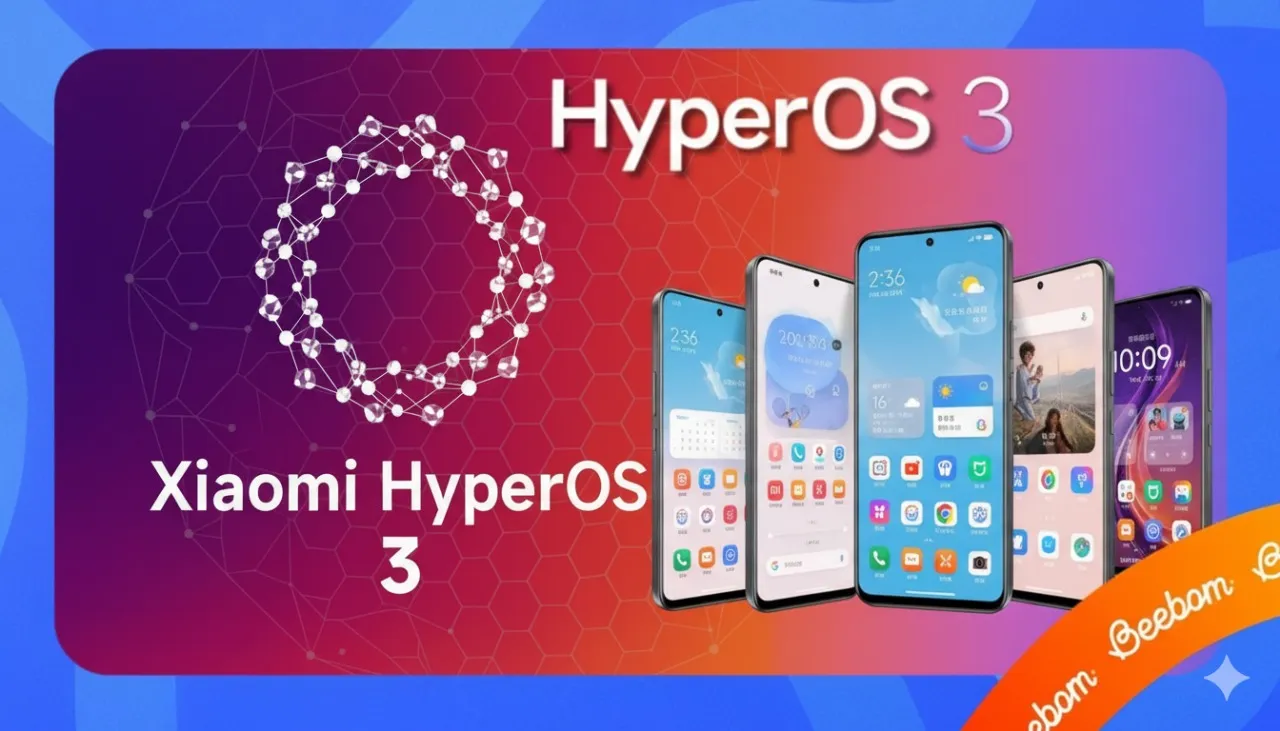
Xiaomi has officially launched HyperOS 3, its brand-new operating system based on Android 16. Packed with advanced AI features, a refreshed design, and smoother performance, Xiaomi HyperOS 3 is designed to connect smartphones, tablets, wearables, and even smart home devices into one seamless ecosystem.
If you’re wondering about the HyperOS 3 release date, features, supported devices, and global rollout, this guide covers everything you need to know. For more on Xiaomi’s latest innovations, check out Xiaomi’s official website.
HyperOS 3 Release Date and Rollout
HyperOS 3 release date in China was October 26, 2025, alongside the Xiaomi 15 series. The global rollout started in October 2025, with updates arriving in phases for Xiaomi, Redmi, and POCO devices.
- First public beta: August 28, 2025
- Official release schedule: September 19, 2025
HyperOS 3 Update Schedule
Phase 1 (October 15, 2025)
- Xiaomi 15 series, Redmi K80 Pro
Phase 2 (October 31, 2025)
- Xiaomi MIX Flip 2, Xiaomi Civi 5 Pro, Xiaomi Pad 7 Ultra, Redmi K80, Turbo 4 series, Watch S4
Phase 3 (November 15, 2025)
- Xiaomi 14 series, MIX Fold 4, MIX Flip, Redmi K70 series
🌍 Global rollout: October–November 2025 for regions including India and Europe. Learn more about the rollout on GSMArena.
HyperOS 3 Features
HyperIsland: Dynamic Notifications
One of the biggest highlights of HyperOS 3 features is HyperIsland, Xiaomi’s take on Apple’s Dynamic Island. For a comparison with other OS features, visit Android Authority.
- Dual-Island for multiple notifications
- Real-time updates for music, flights, timers, navigation
- Charging speed display
- Drag-and-drop functionality
HyperAI: Xiaomi’s AI Integration
HyperOS 3 AI features include tools for writing, visuals, and smart search.
- AI Writing Tools: tone adjustment, DeepThink mode, note creation
- AI Audio & Visuals: real-time transcription, translation, AI wallpapers
- AI Search: on-device answers, gallery photo search
Cross-Platform Ecosystem
HyperOS 3 focuses on connectivity across devices. For insights on cross-device ecosystems, see The Verge.
- Run Xiaomi apps on Mac
- Unlock Xiaomi phones using Touch ID/Face ID
- AirDrop-style file sharing
- Cross-device copy-paste
Performance and Security
- 30% faster system performance
- 21% quicker app launches
- 15% gaming FPS boost
- Stronger encryption, post-quantum security, offline device tracking
HyperOS 3 Eligible Devices
Here’s the complete HyperOS 3 supported devices list for Xiaomi, Redmi, and POCO users. Check device compatibility on Xiaomi’s support page.
Xiaomi Devices
- Xiaomi 17 series
- Xiaomi 15 series
- Xiaomi 14 series
- Xiaomi 13 series
- Xiaomi 12 series
- Xiaomi Civi series
- MIX Fold and MIX Flip models
Redmi Devices
- Redmi K80, K70, K60, K50
- Redmi Note 12–15
- Redmi Turbo 3 & 4 series
- Redmi numbered series (12, 13, 14, 15)
POCO Devices
- POCO F7, F6, F5 series
- POCO X7, X6 series
- POCO M7, M6, C75, C85
Tablets & Wearables
- Xiaomi Pad 6 & 7
- Redmi Pad 2 & Pro
- Xiaomi Watch S4
- Xiaomi Smart Band 9 & 10
Design and User Experience
HyperOS 3 is built with Xiaomi’s Alive Design philosophy, offering:
- Liquid Glass aesthetics
- Natural vitality color system
- Minimalist interface with smoother transitions
- Rounded corners for a softer look
This makes the OS feel cleaner and more modern compared to MIUI. For a deeper dive into HyperOS design, visit CNET.
HyperOS 3 Development and Ecosystem
Built on Android 16, HyperOS 3 has been in development since 2017. It merges Xiaomi’s Vela OS, Mina OS, and car systems into one unified OS.
It supports:
- 82 languages
- 200+ processors
- 200+ device categories
- Over 600 million connected devices worldwide
Learn more about Xiaomi’s ecosystem on TechRadar.
Final Thoughts: Should You Upgrade to HyperOS 3?
The Xiaomi HyperOS 3 update isn’t just a software refresh — it’s a big step forward. With smarter AI features, cross-platform connectivity, faster performance, and better security, it puts Xiaomi in direct competition with Apple and Samsung.
If you own a recent Xiaomi, Redmi, or POCO device, upgrading to HyperOS 3 is definitely worth it.